
Quectel / Cellular modules
Quectel BG96 Wireless Module
Quectel BG96: LTE Cat M1 / Cat NB1 / EGPRS.
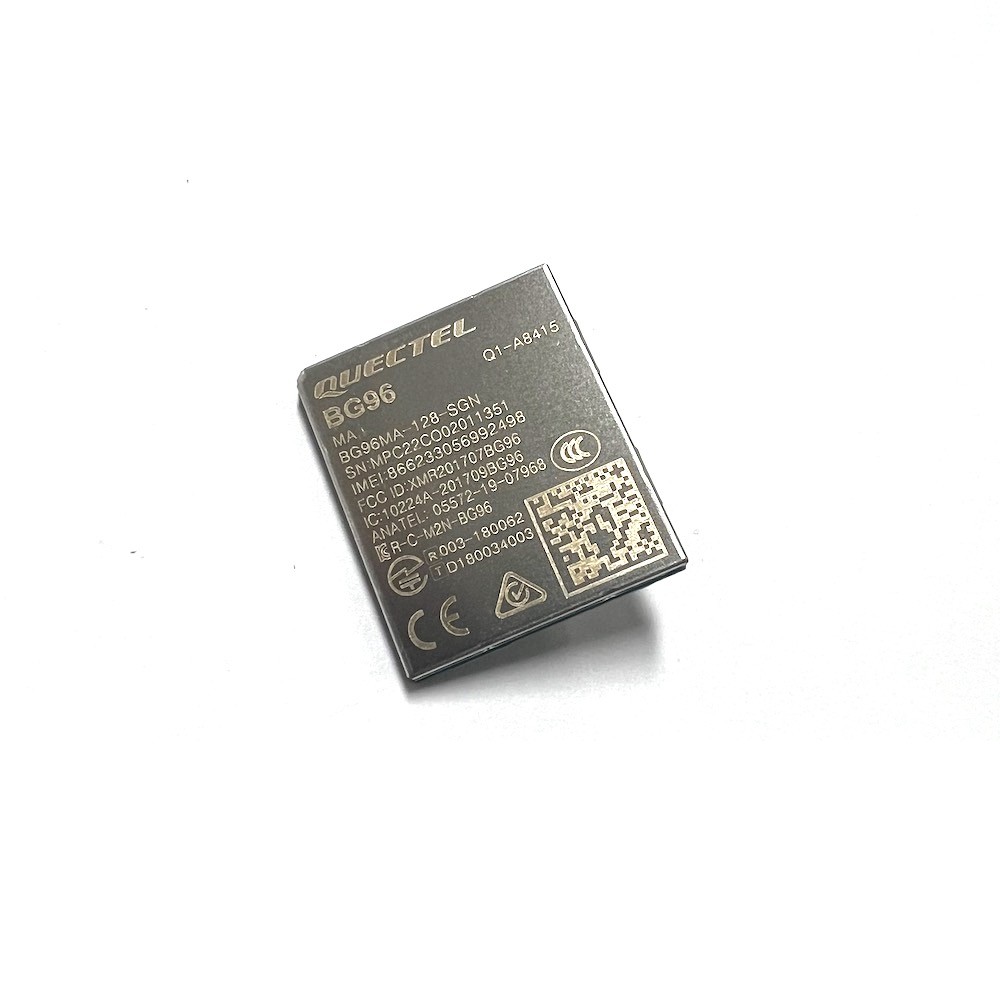
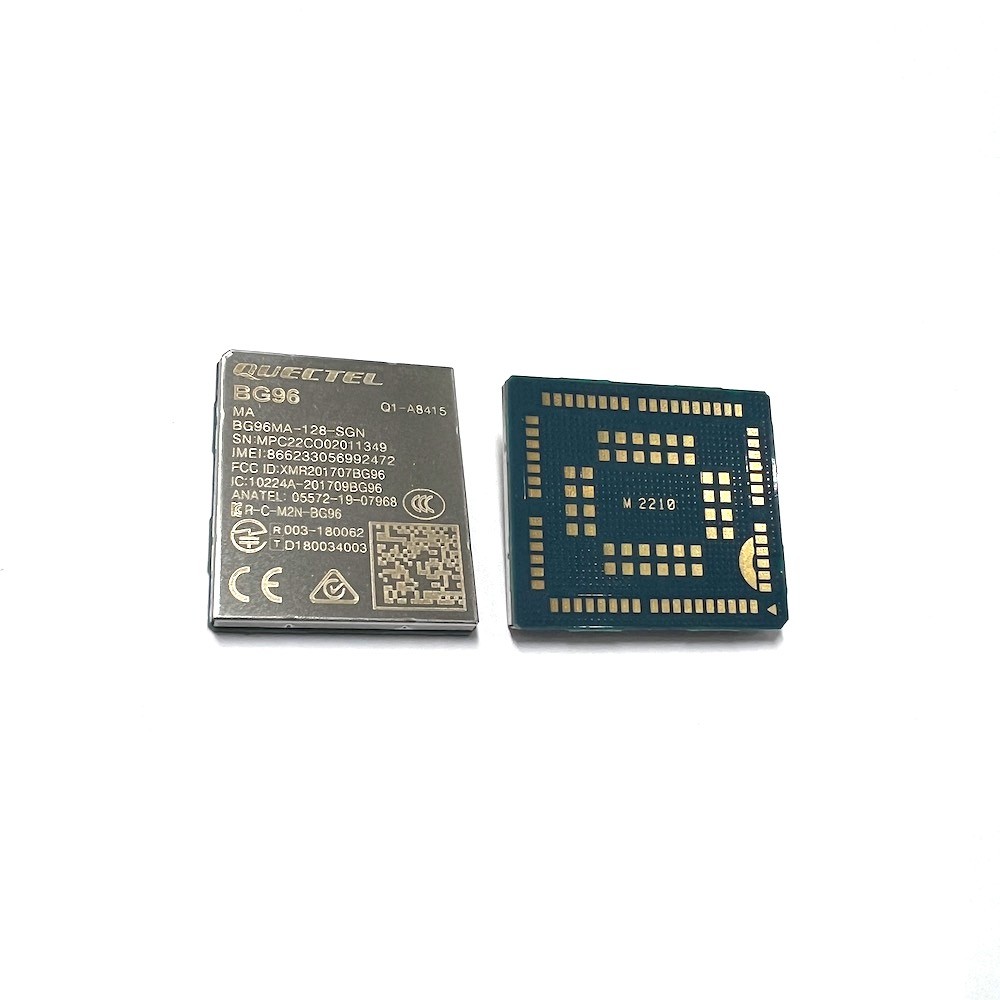
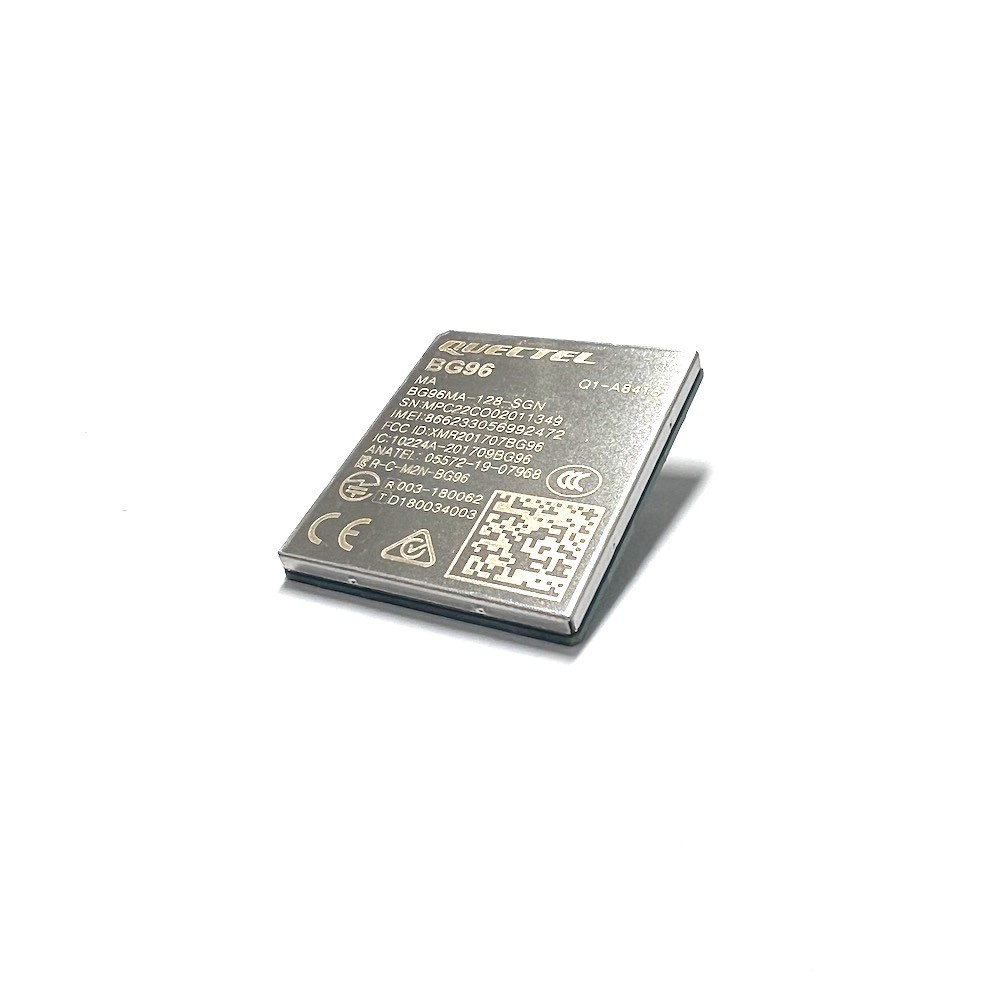
Technical specifications
Network and hardware revision
| Network technology | LTE Cat M1 / Cat NB1 / EGPRS |
|---|---|
| LTE bands | B1/B2/B3/B4/B5/B8/B12/B13/B18/B19/B20/B25/B26/B28 B25 requires hardware R1.2; B26 requires R1.1 and Cat M1 mode. |
| GSM / EGPRS bands | GSM850 / EGSM900 / DCS1800 / PCS1900 |
| Maximum data rates | Cat M1 375/375 kbps DL/UL; Cat NB1 32/70 kbps DL/UL Vendor maximum rates; throughput depends on network conditions. |
Electrical and mechanical
| Package | 102-pin LGA, SMD |
|---|---|
| Dimensions (mm) | 26.5 × 22.5 × 2.3; each ±0.2 |
| Supply voltage (V) | 3.3–4.3; typical 3.8 |
| Temperature range (°C) | operating −35…+75; extended −40…+85; storage −40…+90 Some RF parameters may exceed 3GPP tolerances in the extended range. |
Interfaces and options
| Host interfaces | USB 2.0 slave, 3 UART, 1.8/3.0 V (U)SIM, digital audio; main/GNSS antenna |
|---|---|
| GNSS and voice options | GNSS optional; VoLTE under Cat M1 Confirm the enabled firmware, carrier and offered hardware options. |
Variant and operating notes
- Match the hardware revision to the required LTE bands. B25 requires R1.2; B26 requires R1.1 and is supported in Cat M1 mode only.
- Across the extended temperature range, some RF parameters may exceed 3GPP tolerances. The module meets 3GPP specifications again within its operating temperature range.
- The specifications describe the bare module. Specify the carrier board, its power input and any accessories separately.
Product documents
Check your integration requirements
- Share the deployment country, network operator and target bands.
- Confirm the exact order code, firmware and optional features.
- Describe the host interface, power supply and installation requirements.
- List the documents and evaluation evidence your project requires.
Plan the module integration
- Confirm the deployment country, operator and SIM service.
- Match the exact BG96 variant's supported bands and network features to that service.
- Identify the order code and firmware, and check the applicable hardware-design revision.
- Review USB and UART integration for the intended host.
- Check supply, power and temperature requirements for the operating conditions.
- Specify antenna connections, enclosure constraints, quantity and required documents.
A carrier board is a separate configuration. Specify its input power, interfaces and included accessories independently of the bare module.
Discuss your module requirements
Share the model, quantity and deployment requirements so we can review your configuration.
