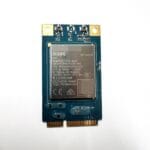
Start a cellular module shortlist with the device and its deployment. A module family name will not tell you whether the selected configuration works with the intended operator, host, antenna and power supply.
An industrial monitoring device may send a short reading at intervals. A gateway may need sustained data transfer, remote management and a specific host driver. Describe that difference before comparing module specifications. The checklist below turns the application into a selection brief that an engineering or sourcing team can review.
Define the deployment country and network
List the countries where the device will operate, then identify the intended operators or SIM provider. Include the installation location when coverage inside a building, enclosure or remote site needs evaluation. A country name alone leaves the network question incomplete.
Check the required cellular technology, bands, operator acceptance and subscription conditions against the exact module variant. If the device crosses borders, include roaming in the review. Keep unknown items visible rather than interpreting them as supported.
The GSMA Mobile IoT Deployment Guide discusses interoperability and differences in the adoption of LTE-M and NB-IoT features. It is useful technical background, but its October 2022 edition does not establish current service availability at your deployment site. Confirm that with the intended operator or connectivity provider. GSMA deployment guide.
Describe the traffic and the response the device needs
Record what the device sends, how often it sends it and how quickly the application needs a response. Include messages from the server to the device, software updates and recovery after a connection loss. These requirements can change the evaluation even when routine telemetry messages are small.
State whether the device is fixed or moving. Describe any connection that needs to remain active during movement. Ask the technical team to compare candidate cellular categories against those requirements rather than choosing a newer category simply because it has a larger headline data rate.
If the project is still exploratory, a plain-language description is enough to start: what the device measures or controls, what the remote system expects and what should happen if communication is interrupted. Distinguish your design targets from results you have already measured.
Review power with the actual operating cycle
Identify the power source, supply rail and available current. For a battery device, add the planned reporting interval, expected active periods and maintenance constraints. Record any battery-life target as a target that needs validation.
A datasheet's low-power figure describes particular conditions. The device also has to start, connect, transmit, receive and recover from poor connectivity. Ask for the relevant hardware guidance and evaluate the complete operating cycle with the intended firmware and network configuration.
For a mains-powered gateway, check the supply and startup requirements too. Do not assume the host connector can supply every candidate module or dongle under every operating condition. The BG96 hardware-design document is an example of the type of module-specific reference to obtain; use the document applicable to the item being evaluated.
Check the host interface and software requirements
Record the host processor or device, operating system and version, physical interface and expected control method. Include driver, firmware and connection-management requirements. For a USB device, “USB” by itself is not a complete compatibility statement.
An embedded module and a USB dongle also create different integration tasks. An embedded design needs the applicable electrical and mechanical interface review. A dongle needs a supported host setup, suitable power and installation arrangements. Confirm which form of hardware the project actually needs before comparing part numbers.
Lurrtech's wireless module range and USB dongle range provide separate starting points for those discussions.
Select the antenna with the enclosure and installation
Bring the antenna requirements into the selection brief early. List the intended bands, antenna ports, connector type and gender, cable requirements, available mounting space and installation location. Include the enclosure material and any known mounting or ground-plane constraints.
Have the relevant engineering team check the antenna documentation against the selected configuration. Then evaluate the assembly in its intended physical arrangement. A connector that fits does not by itself establish suitable RF performance.
Use standard antenna options as the starting point. If the exact antenna is undecided, send the mounting and cable constraints with the module requirements so both can be reviewed together.
Compare candidates using the same requirement table
Use the table to compare each candidate against the same requirements. Leave unresolved items open for follow-up.
| Requirement | Information to capture | Evidence to check |
|---|---|---|
| Deployment | Countries, sites, operator or SIM provider | Current provider information and the applicable module configuration |
| Network | Technology, bands and roaming needs | Manufacturer documentation and provider confirmation |
| Application | Traffic, reporting interval, latency and mobility | Agreed device requirements and an evaluation plan |
| Power | Source, supply, current budget and operating cycle | Applicable hardware guide and measurements for the assembled device |
| Host | Processor, OS/version, interface and software | Supported driver, firmware and integration documentation |
| Antenna | Bands, connectors, cable, mounting and enclosure | Antenna documentation and testing in the intended arrangement |
| Environment | Temperature, space and installation conditions | Applicable ratings and project verification requirements |
| Purchasing | Exact order code, configuration, quantity and destination | A configuration-specific quotation and available documentation |
The Quectel BG96 product page identifies BG96 as an LTE Cat M1/Cat NB1/EGPRS module in an LGA package. That makes it a specific reference to investigate when those technologies suit the brief. It is not a universal recommendation or proof of support by a particular operator. The Lurrtech BG96 reference page provides a route to discuss the requested configuration.
Plan evaluation before fixing the purchasing configuration
Write down what a sample evaluation must demonstrate. Depending on the device, that may include network connection, data exchange, restart and recovery behavior, host integration, power behavior and operation in the intended installation. Assign the checks to the appropriate engineering owner and record the configuration used.
Keep hardware revision, firmware, antenna, host software and network setup with the evaluation record. When a proposed production configuration changes, review whether the earlier results still apply. Record which setup each result applies to.
Product documentation and a module's approvals also need to be considered within their scope. Discuss the requirements for the finished device and destination with the responsible team. Where the project needs independent laboratory work, Lurrtech Quality explains how to request testing support. Send the model, sample quantity, required checks and report needs so we can review them with the laboratory and agree the scope and cost.
Prepare a selection brief or request a known model
Download the editable module selection checklist. Fill in what is known, mark the remaining questions and include the current project stage and sample quantity. You can start the discussion before choosing a final part number.
If you are still selecting hardware, start a Module Selector brief with the country, operator, application, host, power and antenna conditions. If the manufacturer model and configuration are already fixed, request a model quote and include the complete ordering code, quantity and destination.
Sources and scope
- GSMA: Mobile IoT Deployment Guide, October 2022, consulted 11 September 2026. Technical interoperability background, not a current coverage or roaming guarantee.
- Quectel: BG96 product page, consulted 11 September 2026. A named module reference, not confirmation of Lurrtech stock or an operator's acceptance.
- Quectel: BG96 Hardware Design V1.6, consulted 11 September 2026. A model-specific documentation example; use the applicable version for the selected item.
Prepare your selection brief
Bring the details you know and mark the questions that still need an answer.