- 1. Confirm the intended network
- 2. Define device behaviour
- 3. Evaluate the complete system
- 4. Review evidence and open questions
A meter sending a few readings each day and a tracker reporting while moving may both need a cellular connection. They place different demands on it. Choosing LTE-M or NB-IoT starts with the deployment network and the behaviour the device must support.
Both are cellular low-power wide-area technologies. LTE-M is commonly associated with Cat M1, while NB-IoT includes categories such as NB1 and NB2. A category name alone does not establish which features a particular module, firmware version and operator will support.
Use this comparison to prepare an evaluation. For the complete hardware brief, including power, interfaces and mounting, see our cellular module selection checklist.
Check the intended network before comparing modules
List the deployment countries, sites and intended operator or SIM provider. Ask which technology is available at those locations, which bands apply, and whether the service supports your device and subscription. For a device crossing borders, include the roaming arrangements it will depend on.
A country-level launch announcement is a useful starting point. It does not confirm coverage inside a cabinet, network access under a particular SIM contract, or the operator features your application needs. Record who supplied each answer and when it was checked.
If a project depends on a network feature that has not been confirmed, keep that dependency visible. Buying a module that supports both technologies may offer evaluation options, but it does not create network coverage or roaming access.
Compare the behaviour your application needs
Use these questions to plan an initial comparison. Measure throughput, latency and energy use for the selected device and network.
| Application question | LTE-M evaluation | NB-IoT evaluation |
|---|---|---|
| Does the device move while communicating? | A useful starting point where mobility and session continuity matter | Examine the supported release, reselection and connected-mode behaviour; test the actual movement pattern |
| How much data moves in each session? | Include recurring telemetry, diagnostics and software maintenance | Check whether transfer duration and energy are acceptable for the real payload |
| How quickly must a command reach the device? | Confirm the network and sleep configuration as well as radio behaviour | Allow for the actual reachability cycle and evaluate the command deadline |
| Is the installation difficult for radio coverage? | Test the chosen antenna and enclosure at representative sites | Evaluate actual signal conditions and retries; the technology name is not a coverage guarantee |
| Will the device operate in several countries? | Verify the intended operator, SIM and roaming combination | Verify the same items separately for NB-IoT; do not assume an LTE-M agreement covers it |
GSMA's LTE-M overview identifies mobility and relatively fast data throughput among LTE-M's capabilities. The practical choice still depends on the service available to the deployed device.
Distinguish moving equipment from stationary equipment
For a moving device, describe whether it transmits during movement or reports after stopping. Include expected speed, reporting intervals and how the application handles a lost connection. A tracker that can queue reports has different requirements from a device that needs an uninterrupted session.
Avoid the blanket claim that NB-IoT devices cannot move. The GSMA NB-IoT deployment guide discusses cell reselection and later-release connected-mode mobility features. That does not establish their implementation on a particular network or module.
For stationary equipment, put comparable effort into installation details: a basement meter, an outdoor enclosure and a cabinet beside other electronics create different evaluation conditions. Test where the equipment will operate, with its intended antenna and housing.
Budget energy over a complete operating cycle
Compare the energy used to wake, connect, transmit, wait for a response and return to sleep. Include failed attempts and the behaviour after losing coverage. A low sleep-current figure is only one input to a battery estimate.
Both LTE-M and NB-IoT can use power-saving features such as PSM and eDRX. Their use depends on device and network support and the settings actually granted by the network. PSM limits reachability while the device sleeps; longer eDRX intervals change how often it listens for network traffic.
The GSMA energy-efficiency guide shows why message size, timers and coverage conditions belong in an evaluation. Its example measurements are not predictions for your device. Measure the chosen hardware with the intended application and network before setting a battery-life target.
Specify command deadlines and maintenance traffic
“Low latency” is too vague for an evaluation brief. State how long the application can wait for a command or acknowledgement and what it should do when that time expires. Then check whether the planned sleep cycle allows the device to be reached within that period.
Include software updates, certificate renewal, diagnostics and recovery traffic. A device may send small readings in normal use but need a much larger transfer during maintenance. Estimate that workload and test the complete transfer, including a restart after interruption.
For a remote alarm, decide whether the device initiates the message and whether the server must respond immediately. For remote configuration, decide when the server can deliver the command. Those two message directions can place different demands on the power-saving schedule.
Verify the exact module and configuration
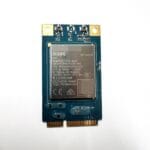
The Quectel BG96 reference page is an example of a module supporting more than one radio technology. Quectel identifies BG96 as Cat M1/Cat NB1/EGPRS. This is a product capability reference, not a recommendation that every project should use it.
Before shortlisting an orderable variant, check its band support, applicable documentation, firmware, interfaces and integration requirements. Confirm operator acceptance and the intended SIM arrangement separately. Any fallback mode also needs its own available network; a feature listed on a module does not promise a continuing service in the deployment country.
Review the antenna requirements at the same time. Record the required bands, connector, cable, mounting and enclosure constraints. Lurrtech can help you select standard antenna products for these requirements.
Use a small test plan before committing a design
Download the connectivity evaluation checklist. Enter requirements first, then record the evidence obtained for each candidate. Fill in the result cells as you complete your own evaluation.
| Evaluation | Record before testing | Evidence to capture |
|---|---|---|
| Network access | Country, operator, SIM plan, technology and bands | Registration outcome and the configuration used |
| Normal reporting | Payload, interval and acknowledgement requirement | Delivery outcome, session time and measured energy |
| Remote command | Maximum acceptable delay and sleep configuration | Observed delivery delay and missed-command handling |
| Movement or difficult coverage | Representative route or installation | Interruptions, retries and recovery behaviour |
| Maintenance | Update size, procedure and recovery requirement | Completion time and behaviour after interruption |
Test the application as a system, including the host and power supply. Keep configuration details with the results so that two candidate modules are compared under known conditions. Agree acceptance criteria before treating an evaluation result as approval for deployment.
Bring the unresolved requirements to selection
If the model is still open, send the country, operator, traffic pattern, movement, command deadline, power source and antenna constraints through the Module Selector. Mark which requirements are confirmed and which need investigation.
If a model is already selected, use the known-model enquiry path with the complete model, configuration and quantity. Include any integration or testing needs. For third-party testing, send the sample details, required checks and report requirements so we can review them with the laboratory and agree the scope, cost and schedule.
Sources and scope
- GSMA: LTE-M technology overview.
- GSMA: NB-IoT deployment guide, June 2019.
- GSMA: Energy efficiency for Mobile IoT, 2022.
- Quectel: BG96 product overview.
Sources checked on 15 September 2026. The dated GSMA guides explain technical behaviour and evaluation considerations; they are not evidence of current operator coverage or a particular service contract. No project-specific test results or battery-life claims are presented here.
Prepare your connectivity brief
Share the requirements you know and identify the questions that need an answer.